Iain McGilchrist, on why we need religion
Sunday, March 29, 2026


Monday, March 23, 2026
From Robert Heinlein, Time Enough For Love:
A human being should be able to change a diaper, plan an invasion, butcher a hog, conn a ship, design a building, write a sonnet, balance accounts, build a wall, set a bone, confort the dying, take orders, give orders, cooperate, act alone, solve equations, analyze a new problem, pitch manure, program a computer, cook a tasty meal, fight efficiently, die gallantly. Specialization is for insects.
Quoted in Iain McGilchrist, The Matter With Things, Ch. 13, p. 501.
Tuesday, June 11, 2024
Benedict of Nursia
It's been a long time since my last post. Creating and maintaining a blog is a work that requires a good deal of discipline. It seems to require as well a strong sense of its purpose. It is uncertain to me which of these requirements is lacking in this blog, perhaps both. Yet, periodically, I renew my inspiration to post to the blog because of some new insight or special reading that I happen to encounter.
New inspiration has arrived! It is coming from a little booklet entitled "Benedict of Nursia, His Message for Today". The following quotes from this 63 page booklet I found to be resonant with a post from April 13, 2009. I also noticed a similarity between the environment St. Benedict describes as prevalent at the time and our current environment.

"… Newer studies have shown that Benedict relied very much on models for his Rule, especially the so-called Regula Magistri. …it is precisely in comparison to the model that the originality and the true greatness of Benedict can be seen. In contrast to a pessimistic, suspicious, and often rigorous review of humanity in the model, Benedict shows a trustful attitude toward his monks. Trusting in the good core of human beings was anything but a matter of course in a time when hostile parties vied in committing horrors against each other, in which the moral strength of Roman culture was being extinguished and no new initiative toward a peaceful common life for human beings was on the horizon.… In this unreliable age when people lived in fear and mistrust one another, Benedict ventured to believe in the goodness of human beings and did not lead his monks with suspicious harshness, but in trust, kindness, and brotherly love." p. 14
Tuesday, April 4, 2023
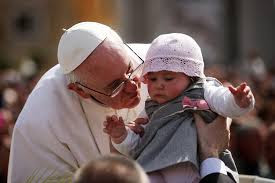
Pope Francis - Insights
from The Great Reformer – Francis and the Making of a Radical Pope by Austen Ivereigh, p. 111, 113.
 While
reading Denzinger's Enchiridion—a widely used collection of church
teachings—Bergoglio had been struck by an early-church formula of Christian
faith: that the faithful people was infallible in credendo, in its
believing. The Vatican Il document, Lumen Gentium, had recast the Church not as
an institution so much as a people, the "People of God"; from
Denzinger he had grasped that the "people" was also a repository of
faith. As Bergoglio later wrote: "When you want to know what the Church
teaches, you go to the Magisterium . . but when you want to know how the Church
teaches, you go to the faithful people. The Magisterium will teach you who is
Mary, but the faithful people will teach you how to love Mary."
While
reading Denzinger's Enchiridion—a widely used collection of church
teachings—Bergoglio had been struck by an early-church formula of Christian
faith: that the faithful people was infallible in credendo, in its
believing. The Vatican Il document, Lumen Gentium, had recast the Church not as
an institution so much as a people, the "People of God"; from
Denzinger he had grasped that the "people" was also a repository of
faith. As Bergoglio later wrote: "When you want to know what the Church
teaches, you go to the Magisterium . . but when you want to know how the Church
teaches, you go to the faithful people. The Magisterium will teach you who is
Mary, but the faithful people will teach you how to love Mary." 
In his first
talk as provincial, Bergoglio would use this notion to reject ideologies, From
now on, the idea would appear constantly in his writings. The “pueblo fiel”
were both vaccine and antidote, the hermeneutic of a true reform.
……
Bergoglio … was not a theologian and was wary of being ensnared by labels. But his own view of history, both national and Christian, pointed him in the same direction, In the idea of "God's holy faithful people" Bergoglio had what theologians call a hermeneutic—an interpretative key, or yardstick—that would allow him to reform and unite the province, beyond ideology, by focusing very directly on the poor. It was neither conservative …nor clerical: he did not believe that the clergy, or the bishops, or Rome were in possession of the truth that they distributed downward, but that the Holy Spirit was revealed through a dialogue between the pueblo fiel and the universal Church. It was a radical stance, an option for the ordinary people, the fishermen and shepherds to whom God revealed Himself in Jesus Christ two thousand years ago.
Wednesday, March 1, 2023
WOLF HALL - AN AMAZON REVIEW?
WOLF HALL by Hilary Mantel
Wolf Hall is a 2009 novel published by Hilary Mantel. I’ve only gotten a couple hundred pages under my belt but somehow I feel compelled to opine on the author’s portrayal of the characters. (I feel compelled to opine quite often.)
The characters are members of the Royal court in the early 16th century, the prominent religious influencers of the time and the court hangers-on wishing to curry favor.
These characters all exhibit a piety in their daily lives that is not common in today’s Sunday-only religious mentality. They wear religious relics and medals, they are inspired by some saint or another, and they pray over daily actions and decisions that have to be made. This reminded me of the daily life that was part the Hebrew characters of the Old Testament. Life was a journey with God walking along side you.
The author also portrays the social and political ambiance of the time. As this aspect of their lives is portrayed I got the sense that the displays of piety and religious fervor were just a crust over an unreal piety; one that did not really convey a true sense of the Christian Spirit.
Under this surface crust of Christian devotional practices lied a concern for social positioning and financial endeavors. They displayed a jealousy of and a pursuit of political power and contrived conniving actions in pursuit their objectives.
This started out as a sort of book review. Maybe I could post it on Amazon. But as I inked these thoughts the question formed in my mind, “Are we really any different today?”.
I think not. Although perhaps our crust is a little thinner.
Thursday, February 23, 2023
THE CERTAINTY OF CHRISTIAN HOPE

"...it is only in so far as the “person” – or the I who goes beyond itself and toward all men – finds itself involved the going beyond – or, in other words, in loving the neighbor in the way that
God who “makes his sun to rise … on the just and the unjust”, loves him – that it
sees itself as being included in hope …. And also as one who must always ask
himself whether he achieves this going beyond in reality and not just
apparently, decisively and not just irresolutely, irrevocably and not just for
a time. Even if someone could know himself as being in the “certainty” inherent
in Christian hope, he still does not know whether he will transgress against
love and thereby also forfeit the certainty of hope. It is therefore
indispensable that every individual Christian be confronted, in the greatest
seriousness, with the possibility of his becoming lost."
Dare We Hope, p.64, 2014 by Ignatius Press
DARE WE HOPE
 |
| Gabriel Marcel |
Dare We Hope, "That All Men Be Saved" is the title of an essay by Hans Urs von Balthasar. Balthasar draws a definition of hope from philosopher and Catholic convert, Gabriel Marcel. It distinguishes the virtue of Hope from a mere wish.
“Hope is essentially the open readiness of a soul that has involved itself sufficiently,
at the inward level, with the experience of communion, to assume the mental attitude
--- over and beyond mere will and cognition ---
in which it posits the living everlastingness that lends that experience both its security and pledge.”
Dare We Hope, p.62, 2014 by Ignatius Press
Subscribe to:
Posts (Atom)